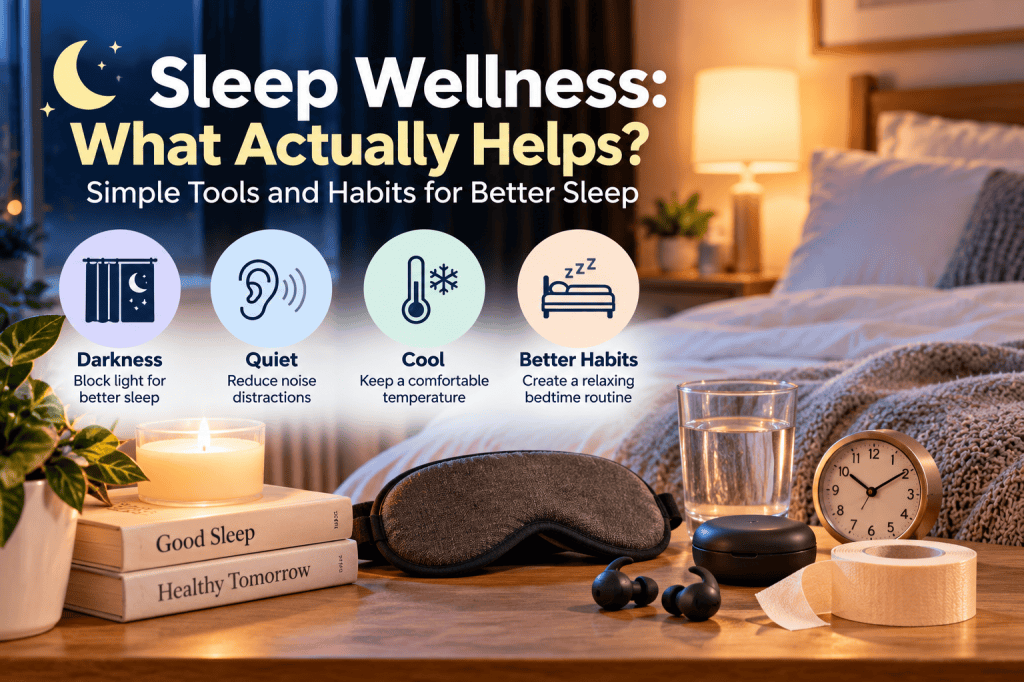
For a long time, I thought better sleep simply meant going to bed earlier.
But sleep quality depends on much more than bedtime.
The room.
The light.
The noise.
Our habits before bed.
And lately, there are also many sleep products being marketed as “must-haves.”
Mouth tape.
Sleep earbuds.
Blackout curtains.
Eye masks.
White-noise machines.
Some can be useful.
Some are more complicated than they look.
So I wanted to take a closer look at which ideas make sense, which ones are optional, and which ones deserve a little caution.
1. Start With the Sleep Environment
Before buying anything, I think the bedroom itself is the best place to start.
CDC sleep guidance recommends keeping the bedroom:
Dark
Quiet
Cool
Comfortable
That sounds simple, but it can make a real difference. 질병통제예방센터
Streetlights, phone screens, glowing clocks, and hallway lights can all make a bedroom brighter than we realize.
So one of the easiest improvements may be to reduce light first.
2. Blackout Curtains Can Be Worth It
If outside light comes through the windows, blackout curtains or room-darkening shades can be a very practical upgrade.
CDC guidance specifically suggests making the sleep space very dark and using opaque window coverings when necessary. 질병통제예방센터
If curtains aren’t an option, a comfortable eye mask can be another simple solution.
For me, this is one of the sleep products that makes the most sense because it solves a clear problem without being complicated.
3. What About Sleep Earbuds?
Sleep earbuds can be helpful for people who live with:
Traffic noise
A snoring partner
Apartment noise
Early-morning sounds
Some are designed to play soft music, calming sounds, or white noise.
The important thing is volume.
Louder sound is not necessarily better.
I would keep the volume low and use them mainly to mask disruptive noise, not to blast sound all night.
Also, the evidence for continuous white noise improving sleep is still limited and mixed, so I think of it as a comfort tool rather than a proven sleep treatment. PubMed
Sometimes simple foam earplugs may work just as well.
4. Mouth Tape: Popular, but Not as Simple as It Looks
Mouth taping has become popular on social media.
The idea is that closing the mouth encourages nasal breathing and may reduce snoring or dry mouth.
But this is one product I would be careful with.
There is not strong enough evidence to say mouth taping reliably improves sleep or treats snoring.
And it can cause problems such as:
Difficulty breathing
Skin irritation
Anxiety
Poor sleep
It can be especially risky for people with nasal obstruction, congestion, allergies, sinus problems, or sleep apnea. Cleveland Clinic
If someone frequently sleeps with their mouth open or snores heavily, I think it makes more sense to ask why that is happening rather than simply taping the mouth closed.
5. Snoring Can Be a Sign of Something Bigger
This is important.
Snoring isn’t always harmless.
In some people, it can be related to obstructive sleep apnea.
Sleep apnea can repeatedly interrupt breathing during sleep and reduce sleep quality.
Treatments may include CPAP, positional changes, or properly fitted oral appliances, depending on the person. Cleveland Clinic
That is very different from simply buying mouth tape online.
6. A Cool Bedroom Can Help
Temperature also matters.
CDC guidance suggests keeping the bedroom comfortably cool.
For many people, around 65°F to 68°F can feel comfortable for sleep, although personal preference varies. 질병통제예방센터
Sometimes improving sleep can be as simple as:
Using lighter bedding
Lowering the thermostat
Using breathable sleepwear
Running a fan
Not every sleep solution needs to be high-tech.
7. Put the Phone Away Earlier
One of the cheapest sleep tools may be using the phone less.
CDC recommends turning off electronic devices at least 30 minutes before bedtime. 질병통제예방센터
That may help reduce stimulation and make the bedroom feel more like a place for rest.
I know this is easier said than done.
But even moving the phone away from the bed can help.
8. A Consistent Sleep Schedule Still Matters More Than Gadgets
The newest sleep product can look tempting.
But basic habits still matter most.
Going to bed at about the same time.
Waking up at about the same time.
Avoiding late caffeine.
Avoiding heavy meals close to bedtime.
Getting regular exercise.
CDC continues to recommend these simple habits for better sleep. 질병통제예방센터
That tells me something important:
Sleep products can support good habits.
They cannot replace them.
What I Would Buy First
If I wanted to improve my sleep environment, I would start simple.
First:
A darker room.
Then:
Less noise.
Then:
A cooler temperature.
After that, I might consider an eye mask, earplugs, or low-volume sleep earbuds if I still needed them.
Mouth tape would not be at the top of my list.
Especially if snoring, mouth breathing, or poor sleep is happening regularly, I would rather figure out the cause first.
My Sleep Wellness Rule
I’m learning that better sleep is usually not about buying one perfect product.
It is about creating a better sleep environment and repeating good habits.
Dark.
Quiet.
Cool.
Consistent.
And simple.
That may not sound exciting.
But sometimes the boring basics work best.
Sunny’s One Line
Better sleep usually starts with a better environment—not a longer list of gadgets.


Leave a Reply