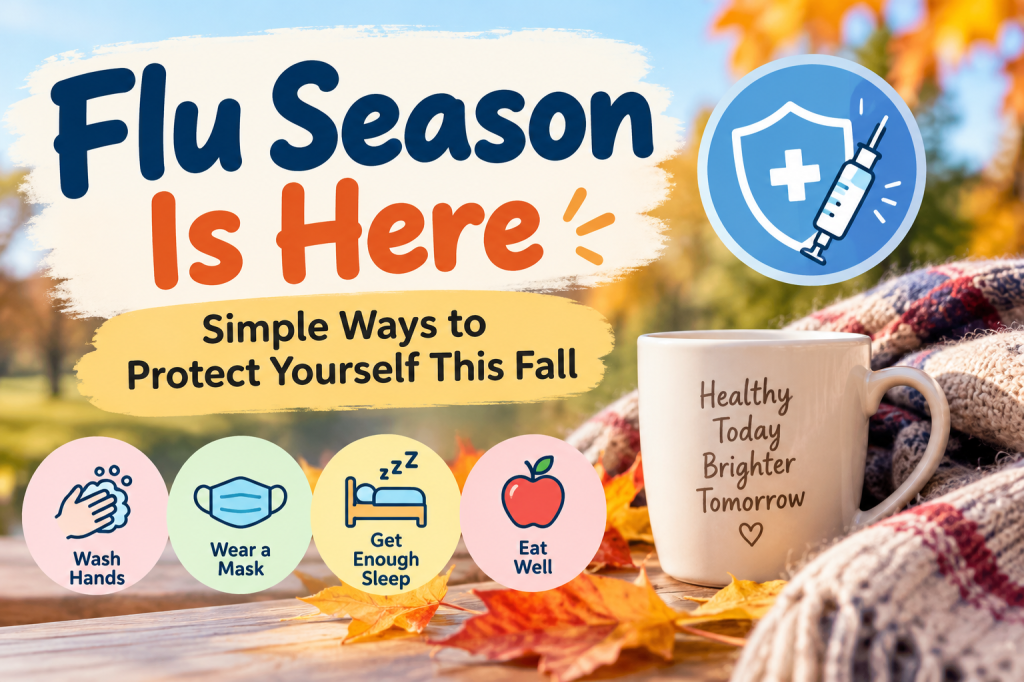
Every fall, I notice the same thing.
The weather starts changing.
Mornings become cooler.
People spend more time indoors.
And suddenly it feels like everyone around me is coughing, sneezing, or talking about getting sick.
This is also the time of year when I start thinking about the flu shot.
But one thing I’ve learned is that getting a flu vaccine and preventing a common cold are not exactly the same thing.
The flu vaccine helps protect against influenza viruses.
It does not prevent every cold or every respiratory infection.
So during seasonal changes, I think it makes sense to use several simple habits together.
1. Get Your Flu Shot at the Right Time
The CDC recommends an annual flu vaccine for most people age 6 months and older.
For most adults, September and October are generally good times to get vaccinated.
Ideally, vaccination should happen by the end of October.
That timing gives the body time to build protection before flu activity becomes more widespread.
It usually takes about two weeks after vaccination for protective antibodies to develop.
If October has already passed, that doesn’t necessarily mean it is too late.
Flu vaccination can still be helpful later in the season as long as influenza viruses are circulating.
2. Remember That the Flu Shot Does Not Prevent the Common Cold
This is something that can be confusing.
Influenza and the common cold are caused by different viruses.
So someone can get a flu shot and still catch a cold.
That does not mean the flu vaccine “didn’t work.”
The goal of the flu vaccine is to reduce the risk of influenza and its complications.
It can also reduce the severity of illness in people who still get the flu after vaccination.
That distinction helped me understand why other prevention habits still matter.
3. Wash Your Hands More Often Than You Think You Need To
Handwashing sounds almost too simple.
But it remains one of the easiest ways to reduce the spread of germs.
I especially try to wash my hands after:
Coming home from shopping
Touching shared surfaces
Being in crowded places
Blowing my nose or coughing
Before preparing food
Soap and water for at least 20 seconds is a good habit to keep.
And when soap and water aren’t available, hand sanitizer can be useful.
4. Try Not to Touch Your Face
This is harder than it sounds.
We touch our eyes, nose, and mouth without even noticing.
But respiratory viruses can enter the body through these areas.
So one small habit I’m trying to improve is simply becoming more aware of how often I touch my face when I’m out.
It’s not about being perfect.
Just a little more conscious.
5. Fresh Air Still Matters
As the weather gets colder, we naturally spend more time indoors.
But crowded indoor spaces can make it easier for respiratory viruses to spread.
When possible, I like to open a window, let fresh air circulate, or spend some time outdoors.
Good ventilation can help reduce the concentration of infectious particles in indoor air.
Even small improvements in airflow can help.
6. Consider a Mask in Crowded Situations
Masks may still be useful in certain situations.
For example:
Busy airports
Crowded indoor events
Public transportation
Medical offices
Places where many people are coughing
A well-fitting mask can add another layer of protection, especially when respiratory illnesses are increasing in the community or when someone is at higher risk of serious illness.
I don’t think of it as something I need everywhere.
I think of it as another tool I can use when the situation makes sense.
7. Sleep and Nutrition Still Matter
No food can guarantee that we won’t get sick.
But our immune system still needs basic support.
I try to pay attention to:
Enough sleep
Regular meals
Protein
Vegetables and fruit
Adequate fluids
Regular movement
When I’m tired, skipping meals, and stressed for several days, I definitely don’t feel my best.
So I think of good sleep and balanced meals as part of seasonal prevention too.
8. Stay Home When You’re Sick
This one helps everyone.
When we’re sick, it can be tempting to push through and keep all our plans.
But staying home when we’re clearly unwell can help reduce the spread of illness to other people.
This is especially important around older adults, young children, pregnant women, and people with chronic health conditions.
Sometimes resting is not only good for us.
It’s also considerate to others.
A Few Flu Vaccine Questions I Used to Have
Can I get the flu from the flu shot?
The standard injectable flu vaccines do not contain live influenza virus capable of causing influenza illness.
Some people may feel sore, tired, or mildly achy after vaccination, but that is not the same as having the flu.
Can I still get the flu after vaccination?
Yes.
No vaccine is perfect.
But vaccination can reduce the risk of getting influenza and may also reduce the severity of illness if infection still occurs.
What if I have an egg allergy?
Current CDC guidance says people with egg allergy can receive any flu vaccine that is otherwise appropriate for their age and health status.
My Seasonal Health Routine
I’ve stopped looking for one perfect way to avoid getting sick.
Instead, I think about layers of protection.
Flu vaccine.
Handwashing.
Fresh air.
Enough sleep.
Balanced meals.
Staying home when sick.
And using a mask when the situation calls for it.
None of these habits is complicated.
But together, they give me a much more realistic way to get through cold and flu season.
Sunny’s One Line
Healthy habits don’t guarantee that we’ll never get sick, but they can give our bodies and the people around us a better chance to stay well.


Leave a Reply