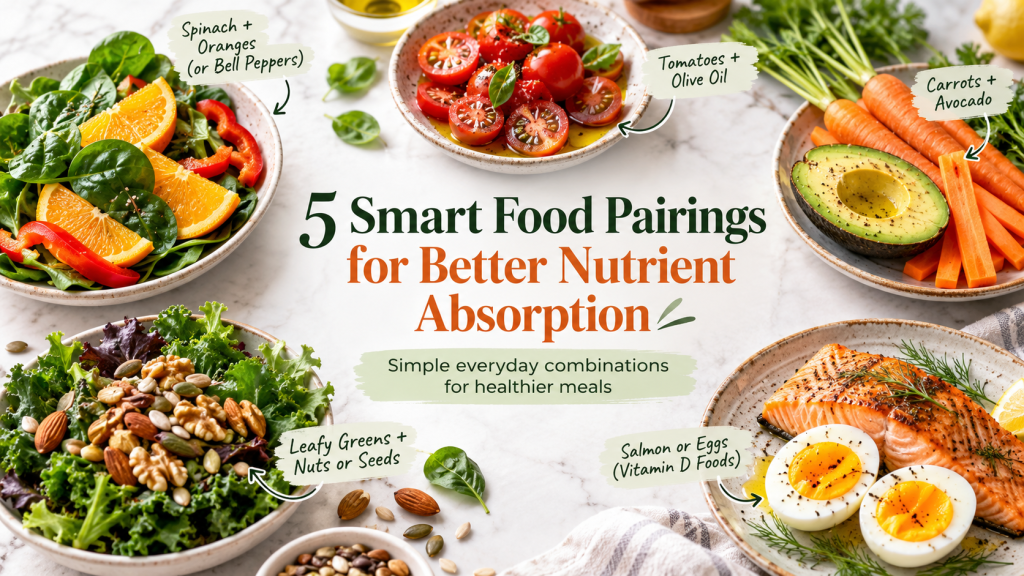
We often think healthy eating is simply about choosing the right foods.
Eat more vegetables.
Eat more fruit.
Choose whole foods.
But there is another simple idea that we sometimes overlook:
What we eat together can matter, too.
Certain nutrients are absorbed more easily when they are eaten with other foods. That means a small change in how we build a meal may help our body make better use of the nutrients already on our plate.
Here are five easy food-pairing ideas you can use in everyday meals.
1. Spinach + Bell Peppers or Oranges
Spinach, beans, lentils, and many plant foods contain non-heme iron.
Our bodies do not absorb this type of iron as easily as the iron found in animal foods. Vitamin C, however, can help improve the absorption of non-heme iron.
So instead of eating spinach alone, try adding:
- Red bell peppers
- Tomatoes
- Strawberries
- Oranges
- Kiwi
- A squeeze of lemon
A spinach salad with bell peppers and lemon dressing is a simple example.
You don’t need a complicated recipe. Sometimes one extra ingredient is enough to make a meal more nutritionally useful.
2. Tomatoes + Olive Oil
Tomatoes contain carotenoids such as lycopene.
Carotenoids are fat-soluble compounds, which means eating them with some dietary fat can help the body absorb them better.
Try tomatoes with:
- Olive oil
- Avocado
- Nuts
- Seeds
Instead of eating plain tomatoes, drizzle a little olive oil over them or add them to a salad with avocado.
Studies have found that eating carotenoid-rich vegetables with dietary fat can improve carotenoid absorption.
3. Carrots or Spinach + Avocado
Carrots are rich in beta-carotene, while leafy green vegetables contain carotenoids such as lutein.
These nutrients also benefit from being eaten with a little healthy fat.
Try:
Carrots + hummus
Spinach salad + avocado
Mixed vegetables + olive oil
Leafy greens + nuts or seeds
This does not mean we need large amounts of oil. The goal is simply to include some healthy fat as part of a balanced meal.
4. Leafy Greens + Healthy Fat
Kale, spinach, broccoli, and other green vegetables are good sources of vitamin K.
Vitamin K is a fat-soluble vitamin, so including some fat in the same meal can help with absorption. Harvard’s Nutrition Source recommends pairing vitamin K-rich foods with foods such as olive oil or avocado.
An easy lunch could be:
Leafy greens
- tomatoes
- avocado
- a little olive oil
- chicken, beans, or eggs
One bowl, several nutrients.
5. Vitamin D Foods + A Meal Containing Fat
Vitamin D is another fat-soluble vitamin.
The National Institutes of Health notes that the presence of fat in the digestive tract can enhance vitamin D absorption, although some vitamin D can still be absorbed without it.
Foods that may provide vitamin D include:
- Fatty fish
- Egg yolks
- Fortified milk
- Fortified plant milks
- Some fortified cereals
Rather than focusing on one “perfect” food, think about building balanced meals that contain vegetables, protein, fiber, and some healthy fat.
A Simple Rule I Try to Remember
I used to think that eating something healthy was enough.
But the older I get, the more I realize that healthy eating doesn’t have to mean buying expensive or unusual foods.
Sometimes it can be as simple as:
Spinach + vitamin C
Tomatoes + olive oil
Carrots + avocado
Leafy greens + healthy fat
Small combinations can make everyday meals a little smarter.
And that feels much easier than trying to follow another complicated diet.
One More Important Thought
Food combinations can support good nutrition, but they aren’t magic treatments.
A balanced diet, enough sleep, regular movement, and routine medical care are still much more important than trying to create the “perfect” meal.
If you have a health condition, take prescription medications, or have been told to limit certain nutrients, your dietary needs may be different.
Sunny’s One Line ☀️
Healthy eating isn’t always about adding more food. Sometimes it’s simply about pairing what we already eat a little more wisely.


Leave a comment